October 27, 2026
By By Sayaspora
Art and culture are widely accessible and are often presented as spaces meant to reflect the general public. However, despite this financial and physical accessibility, art and culture in Canada remain largely white-centered and diverse voices are still underrepresented in Canadian media. This is partly because non-white communities and Indigenous people are rarely in positions of authority and decision-making. In some cases, institutions may include a small number of diverse individuals to appear inclusive but without actually sharing power, a practice which is defined as tokenism.
Why Diversity Matters
To give you an idea, racialized people make up about 27% of Canada’s workforce, but they hold only about 16% of leadership positions in the arts, according to 2021 Census data analyzed by Hill Strategies. These numbers clearly show a gap between representation in the population and representation in positions of power.
Think about it for a moment: can you name a mainstream Canadian director or producer who isn’t white? For many, that question can be difficult to answer. This is why representation behind the camera matters. When non-white communities are missing from creative and decision-making roles, their stories may be simplified, overlooked or even pushed aside completely. In other words, a lack of representation behind the camera can lead to a poor and limited representation in front of the camera.
Stereotypes and Lack of On-Set Diversity
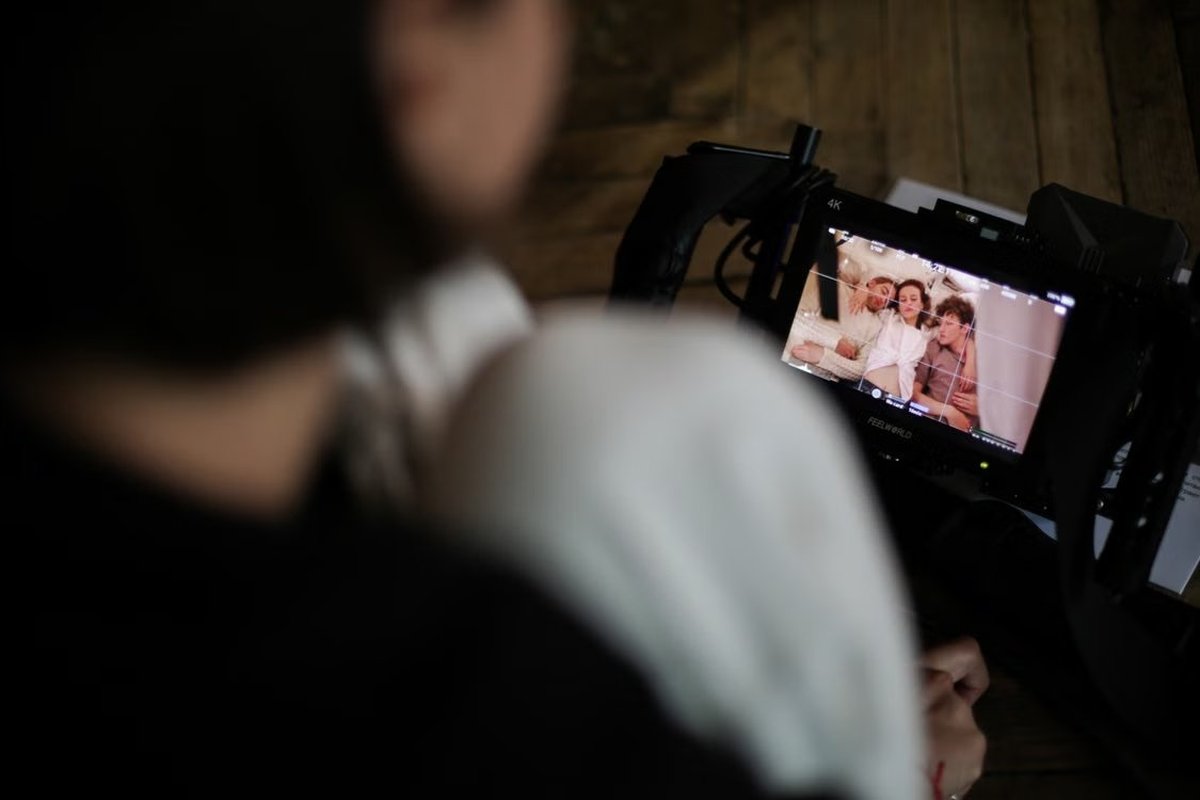
A few years ago, I was a background actress in a Canadian TV show. The story focused on a Muslim family from an Arabic country (the country wasn’t named) living in Canada. While the premise had potential, the portrayal relied on multiple stereotypes and included several inaccuracies about Islam.
Although I was disappointed by this representation, I wasn’t entirely surprised, as there did not seem to be any Arab or Muslim individuals working behind the scenes. Most people on set, from the director to the producers, camera crew and assistants, were white. Hiring an Arab actor can contribute to visibility but it might not be enough to ensure an accurate portrayal of the culture.
Including people of Arab or Muslim backgrounds in different stages of production could instead, help create more realistic and accurate representations. Without that, portrayals of said culture may rely on very limited perspectives and it risks reinforcing stereotypes.
Underrepresentation and Tokenism in Canadian Journalism
It’s not just in TV shows and films that non-white communities are underrepresented; it is also an issue in journalism. A 2021 study by the Canadian Association of Journalists found that 84% of white journalists work full time, compared to 64% of Black journalists. According to Soraya Roberts, even when they are hired “journalists of color are siloed into multicultural media spaces or smaller publications [where they] constantly advocate for and are a workplace’s symbol of diversity.”
This is what we earlier defined as “tokenism”: when institutions make only symbolic and surface-level efforts toward diversity. In simpler terms, this means hiring a small number of people from underrepresented groups to appear diverse rather than create real change within the structure. This suggests that even when non-white journalists are present, their roles and influence may be limited. Over time, the lack of racial representation might cause communities of color to lose trust in news outlets.
Gatekeeping and Fear of Taking Risks
Another factor that might help explain the lack of representation in creative spaces is a fear of taking risks. It is not uncommon for movie studios, newspapers and publishing houses to hesitate when it comes to supporting projects led by creators of color, by fear that general audiences will not resonate with them.
A good example of this is Hollywood. According to the 2024 Hollywood Diversity Report by UCLA, almost 80% of theatrical releases in 2024 were directed by white men, while about 20% were directed by non-white people, and 15.4% by women. To add to this, in 2023 only 29% of lead actors in theatrical releases in the USA were non-white people. While these examples are not specifically Canadian, they still reflect a broader industry pattern in North America.
Knowing that non-white people represented 46.7% of the American population in 2023 (according to UCLA), this can be seen as a form of gatekeeping, where access to opportunities is completely uneven. Even if not always intentional, limiting access to mainstream platforms can reinforce the idea that certain stories are less “universal” than others.
Art and National Identity
Cultural industries play an important role in shaping national identity by determining which stories are told and whose experiences are centered. In Canada, film, television and publishing do more than just entertain; they also build narratives about our country’s collective history, culture and even our sense of belonging.
However, this influence is not evenly distributed. Most people in leadership and decision-making positions are not people of color and because of this, the idea of what constitutes a “Canadian story” can remain quite narrow.
As a result, when non-white communities are represented, they tend to not have control over how their stories are told. This can limit the range of perspectives shown to the public. Ultimately, this means that the version of Canada reflected in art and media might not accurately represent the country’s diversity.
Echoes of Inclusion is funded by the Government of Canada – Canadian Heritage.