June 9, 2026
By Sayaspora
Identity, textiles, and cultural reappropriation with Marième Mboup
Sunday, November 30, 2025
Number of participants: 5 people in person
Workshop Outline:
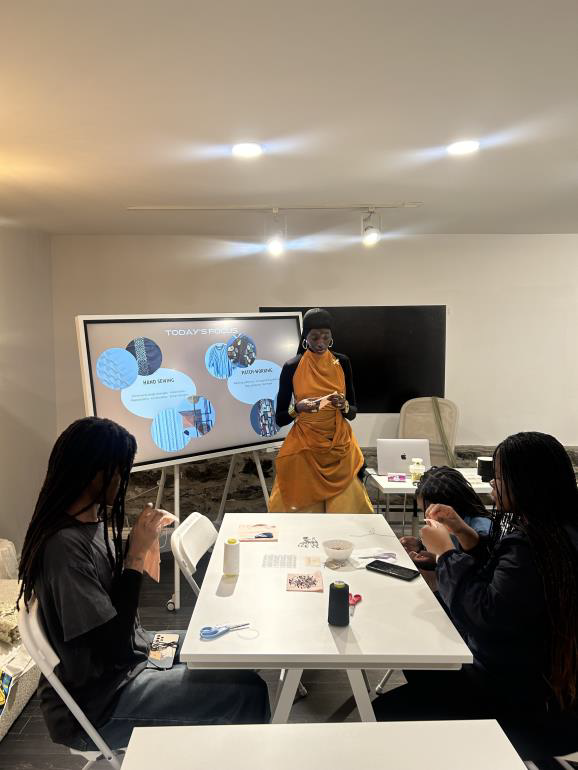
The third workshop in the MTL Through Their Voices program was led by Marième Mboup, an artist specializing in textile exploration, styling, and creative direction. Born and raised in Senegal, she has developed an artistic practice deeply rooted in her African cultural heritage, which she expresses through creations that highlight “raw culture,” diverse identities, and often marginalized voices. Her work explores fashion as a space for storytelling, experimentation, and cultural transmission.
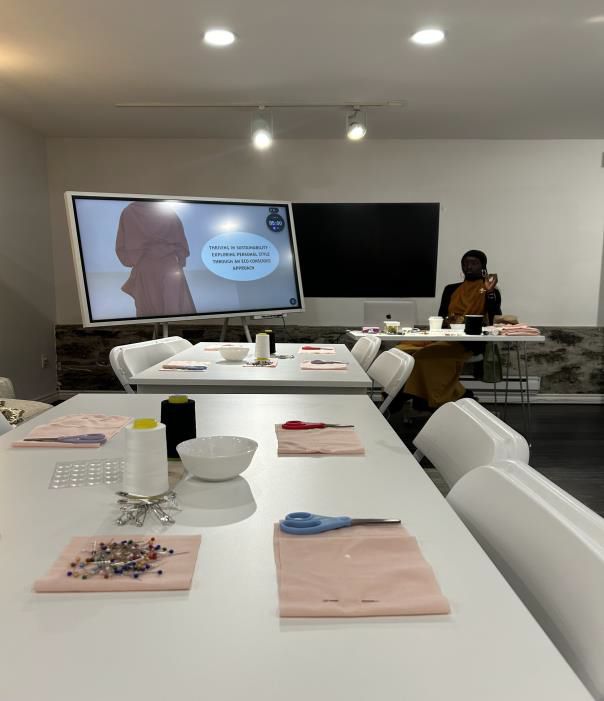
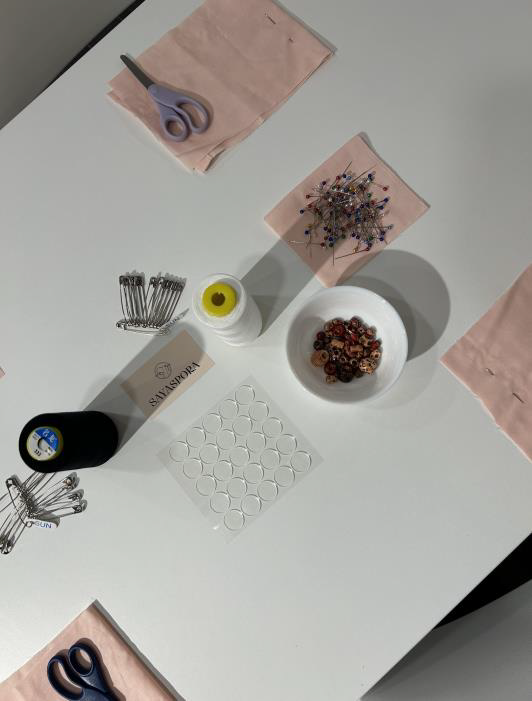
This workshop offered an exploration of traditional fabrics and techniques from different cultures, as well as a reflection on their reinterpretation in a contemporary context. Participants were introduced to various sewing and customization techniques, enabling them to transform and adapt garments and accessories made from traditional textiles.
The goal was to highlight the materials, patterns, and cultural symbolism associated with these fabrics, while also considering their adaptation to an urban and metropolitan environment like Montreal. Through this approach, participants explored how traditional clothing elements can be reappropriated and integrated into a contemporary expression of identity.
This workshop thus offered a space for creative experimentation, where cultural heritage, individual expression, and artisanal practices converge, while also prompting reflection on the hybridization of styles and identities through fashion.
Feedback participants:
The participants particularly enjoyed this workshop, especially learning the basics of sewing and the opportunity to personalize their clothing and accessories using traditional fabrics. They were able to transform items such as tote bags, skirts, and jeans to express their cultural identity while adapting them to an active lifestyle in a metropolis like Montreal.
The exchanges about traditions, values, and cultural influences were rich and appreciated, particularly the discussions about the encounters between their cultures of origin and Montreal culture. The activity involving traditional fabrics, integrated into their creations, was particularly memorable. It allowed them to share a part of their cultural identity in a concrete and creative way, while fostering discovery, sharing, and group cohesion.
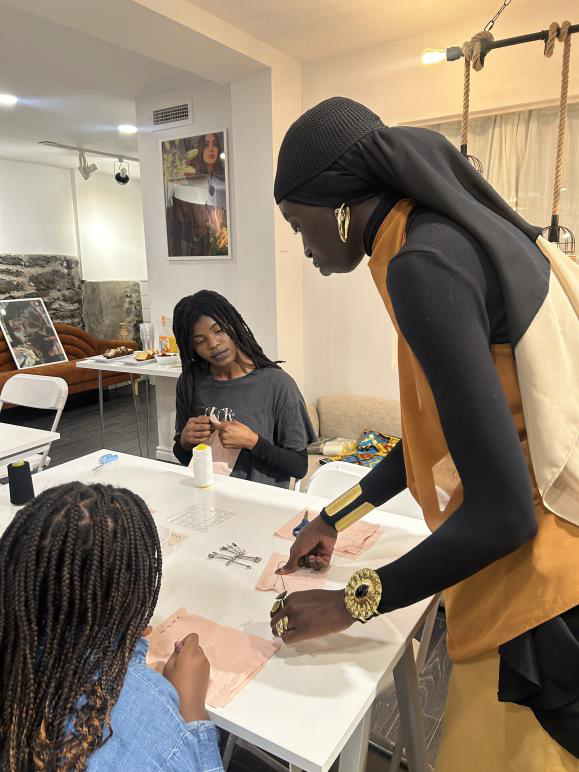
The small number of participants was also seen as a significant advantage, as it allowed Marième to dedicate more time to each participant. This resulted in more personalized support, more practice, and more time for discussion, which enhanced their learning and the quality of the interactions.