By Sayaspora
Saturday, October 18, 2025
Number of participants: 17 people attending in person
Workshop Outline:
The second workshop of the MTL Through Their Lives program was led by Sabine Monpierre, an education and rights promotion advisor at the Commission des droits de la personne et des droits de la jeunesse (Human Rights and Youth Rights Commission). With over 15 years of experience in Afro-Caribbean community development and intercultural dialogue, she is recognized for her work on issues of racism, discrimination, and collective memory, particularly through the development of educational tools and her community initiatives.
This workshop aimed to introduce the narratives and experiences of migration within Montreal’s diverse communities, emphasizing collective memory and intergenerational transmission. Sabine Monpierre presented the U-curve concept of immigration to illustrate the different phases of adaptation experienced by migrants.
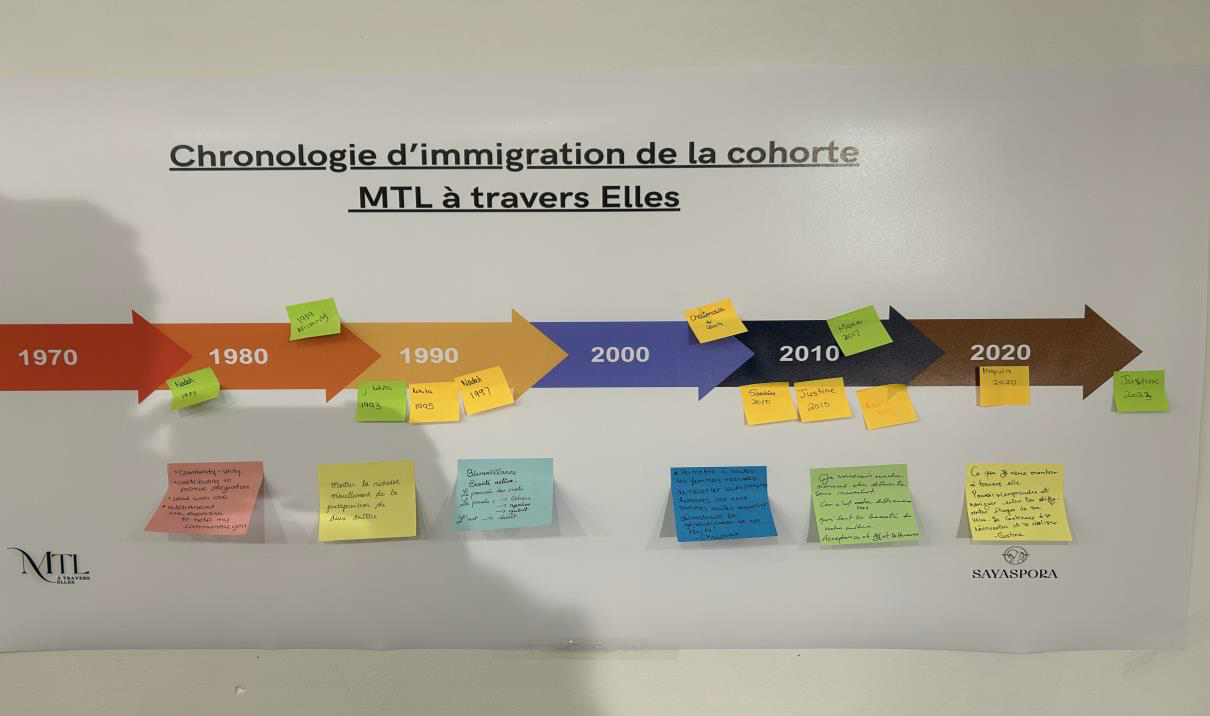
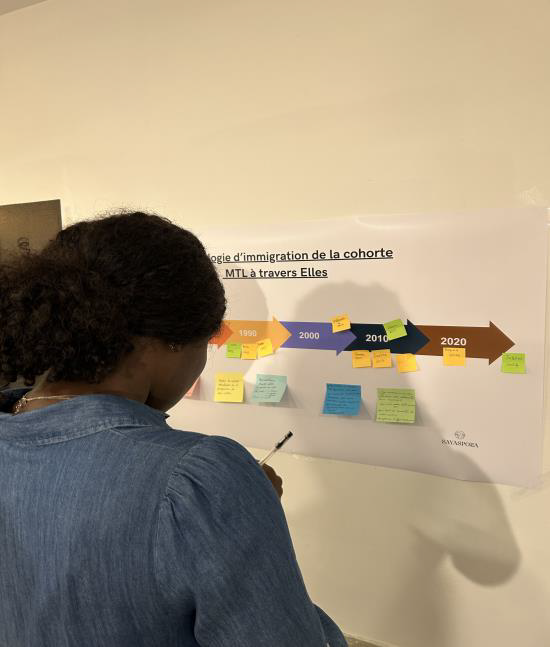
Participants were then invited to put this concept into practice through a collaborative activity: creating a timeline. This model was constructed using the immigration dates of their families and/or their own arrival dates, distinguishing between first, second, and third generation migration patterns, in order to visualize migratory trajectories and their evolution within families and communities.
The discussions explored the evolution of integration narratives, the challenges encountered, and the forms of resilience and success specific to these journeys. The workshop thus fostered a collective awareness of the diversity of migration experiences and the role of memory in the construction of identities.
Participant Feedback:
They appreciated learning more about each other’s origins and migration journeys, as well as the history of immigration in general, which allowed them to better understand their own experiences and level of integration.
Several participants emphasized that they found the connection between the different stages of the The immigration curve and their personal experiences allowed them to better articulate their feelings. They also appreciated the opportunity to compare the realities between different generations (1st, 2nd, and 3rd) and to understand the nuances in integration trajectories within families.
The discussions also highlighted common challenges, regardless of origin (North Africa, the Caribbean, or Africa), which fostered a strong sense of solidarity and mutual understanding. Several participants mentioned being surprised to find how similar their experiences were despite different contexts.
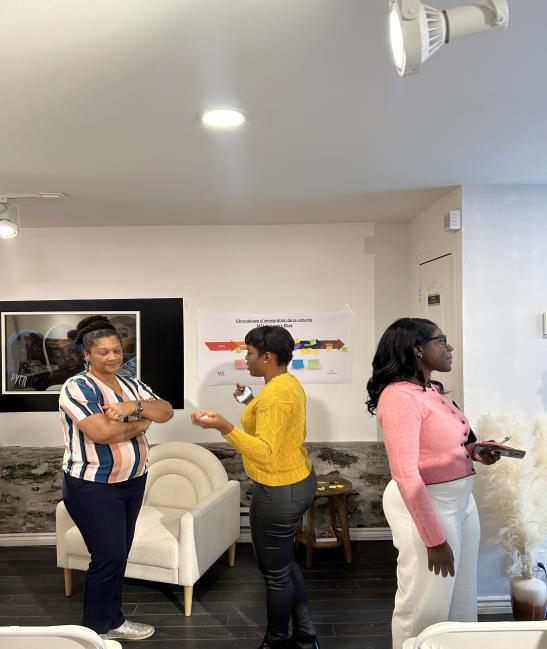
Finally, the discussions and shared anecdotes were particularly appreciated, making the workshop lively and engaging, while fostering collective awareness about migration journeys and intergenerational memory.